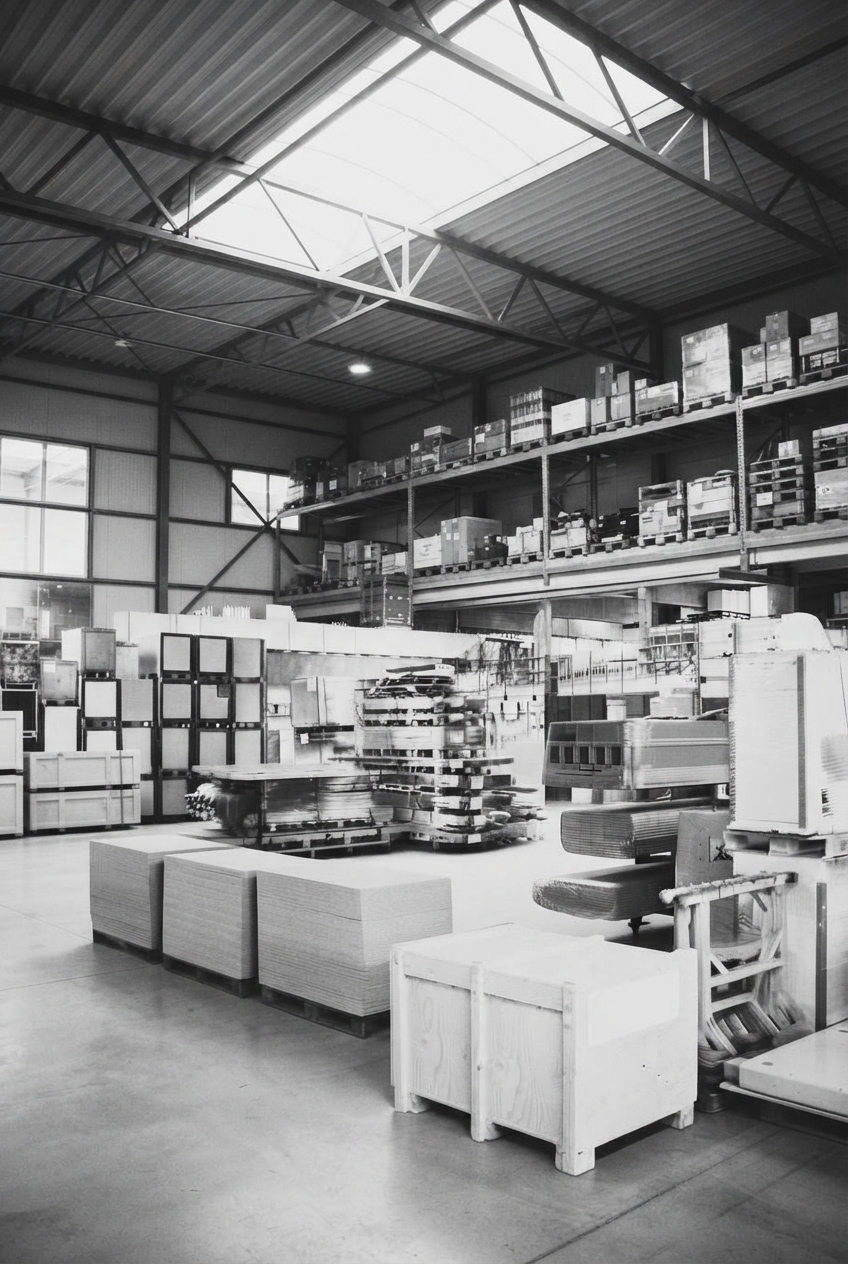
Modular Exhibition Stand Production for Trade Shows and Exhibitions
Modular exhibition stand production combines flexible stand structures with project-specific design, manufacturing and implementation. Instead of producing every exhibition stand as a completely new construction, modular concepts use coordinated components that can be assembled, adapted and reused across different trade shows.
For companies participating in recurring exhibitions, modular exhibition stands can provide a practical basis for consistent brand presentation. Individual components may be combined in different configurations to suit changing booth dimensions, event requirements and presentation objectives.
EXHIBIT Company supports international exhibition projects with modular stand production, custom fabrication, logistics and related implementation services. Depending on the project, the scope can include modular structures, custom-built components, display elements, furniture, transportation, installation and dismantling.
Whether you are an international exhibitor, exhibition stand builder, trade show company or creative agency, modular exhibition stand production needs to connect design, technical planning, manufacturing and on-site implementation. The objective is to create a system that works for the immediate exhibition while considering its potential use in future projects.
We Don't Just Plan. We Produce, Store, Transport and Install.
Successful trade shows require more than planning and project management. They require the ability to turn concepts into physical exhibition environments, keep assets available between events, move them efficiently across Europe and install them professionally on site.
At EXHIBIT Company, we connect these capabilities into one coordinated process. Production, storage, transportation and installation are not separate activities—they are connected stages of delivering a successful trade show.
Our modular approach means you can use exactly the level of support your project requires. We can provide individual services, complement your existing team or coordinate the complete operational process as your European partner.
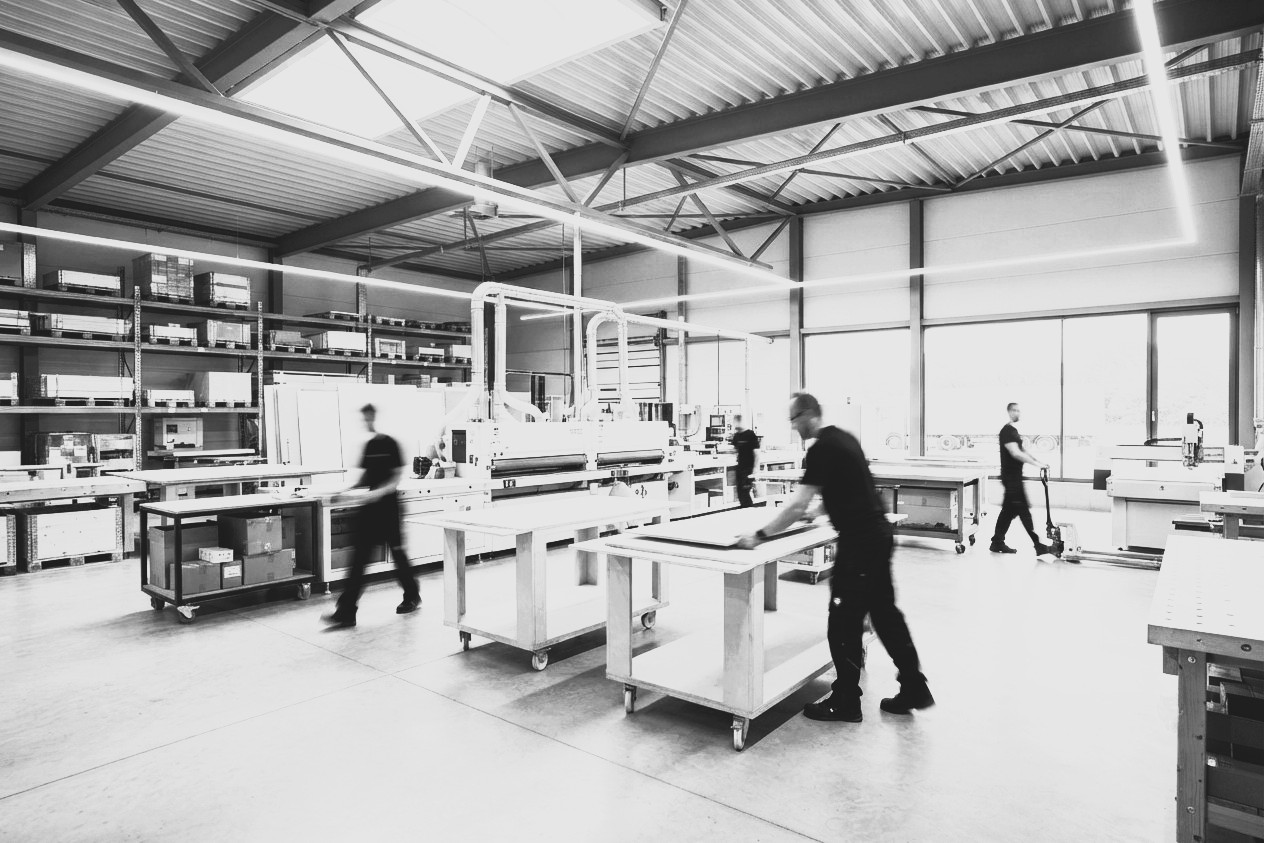
Production & Fabrication
From your concept to a finished exhibition.
A trade show stand has to work in the real world. It needs to be visually strong, technically practical, efficiently produced and ready for the specific requirements of the venue.
At EXHIBIT Company, we combine our trade show expertise with professional production and fabrication capabilities to turn approved concepts into exhibition-ready environments. Depending on your requirements, we can support complete stand production or take responsibility for individual components and production elements.
Our production capabilities include:
- Complete or partial exhibition stand production
- Custom fabrication of exhibition components
- Custom-built structures and branded elements
- Exhibition furniture and display elements
- Modular and reusable exhibition systems
- Individual components for existing stand concepts
- Adaptation and modification of existing exhibition assets
- Production based on supplied designs and specifications
- Coordination of production timelines and deadlines
- Quality control before delivery
- Preparation of exhibition assets for transportation
- Production support for recurring trade show programs
- Coordination between production, logistics and installation
The benefit is a closer connection between what is planned and what is ultimately built. Production can be considered together with transportation, installation requirements, venue regulations and future reuse.
This is particularly valuable for international exhibitors, event agencies and trade show construction companies that need a reliable European production partner without having to manage every individual supplier themselves.
You decide how much production support you need. We integrate it into the wider project.
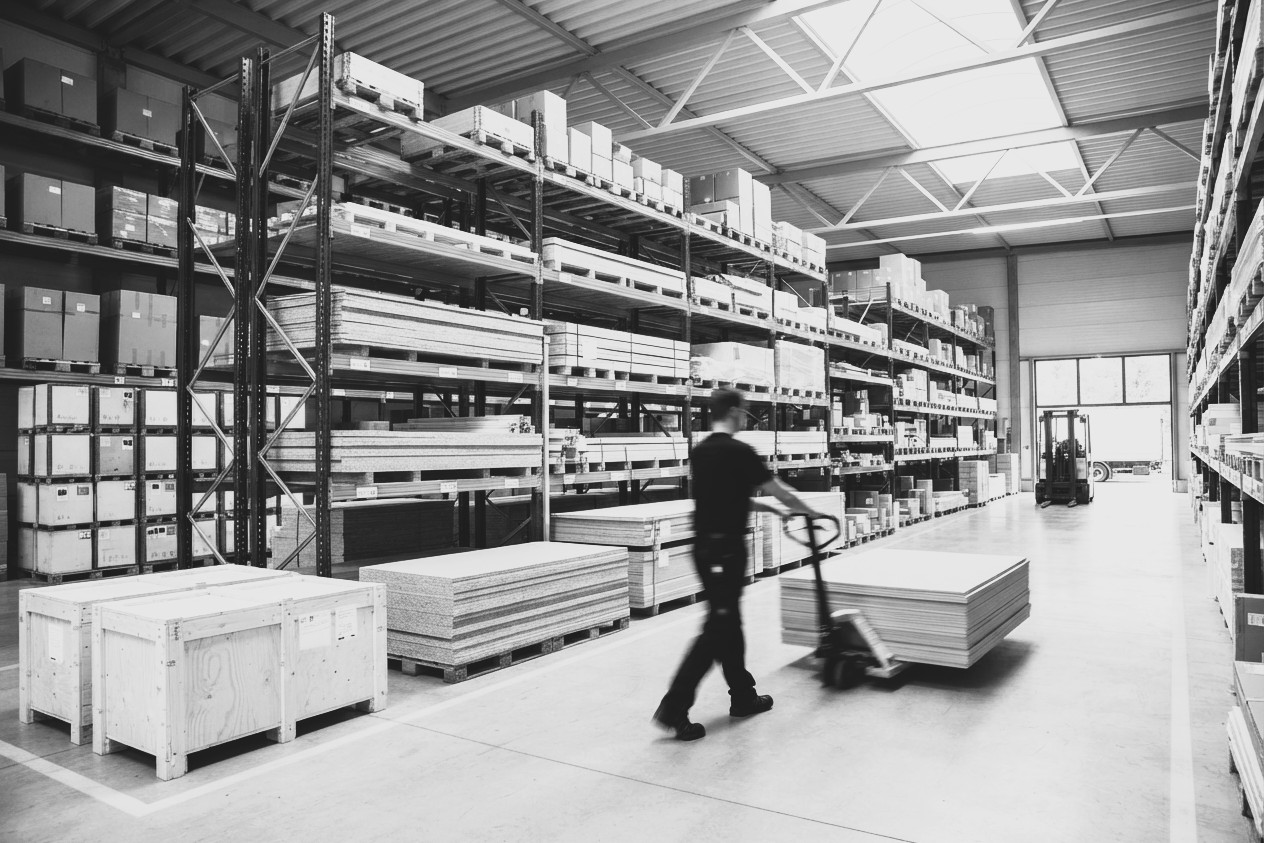
Storage & Inventory
Keep your exhibition assets ready for the next event.
For companies exhibiting regularly across Europe, exhibition stands and components are valuable assets that can be reused across multiple events. Professional storage allows these assets to remain available instead of being produced, shipped and replaced for every individual trade show.
EXHIBIT Company provides storage and handling solutions for exhibition stands, components, furniture, equipment, graphics and other exhibition materials between events.
Our storage and inventory services include:
- Storage of exhibition stands and stand components
- Storage of exhibition furniture and equipment
- Storage of branded and promotional materials
- Handling of exhibition assets between events
- Inventory coordination
- Preparation of materials for upcoming trade shows
- Consolidation of assets for transportation
- Preparation and packing for individual events
- Reuse of existing exhibition components
- Coordination between storage and production
- Coordination between storage and transportation
- Return logistics after an exhibition
- Preparation for the next European event
- Support for recurring and multi-country trade show programs
This creates a more efficient way of managing recurring exhibitions.
Instead of treating every trade show as an entirely new project, existing assets can remain part of a continuous European exhibition program. They can be stored, prepared, transported, installed, dismantled and returned for future use.
That can reduce unnecessary production and transportation while making recurring trade show participation easier to plan.
Your exhibition does not have to start from zero every time.
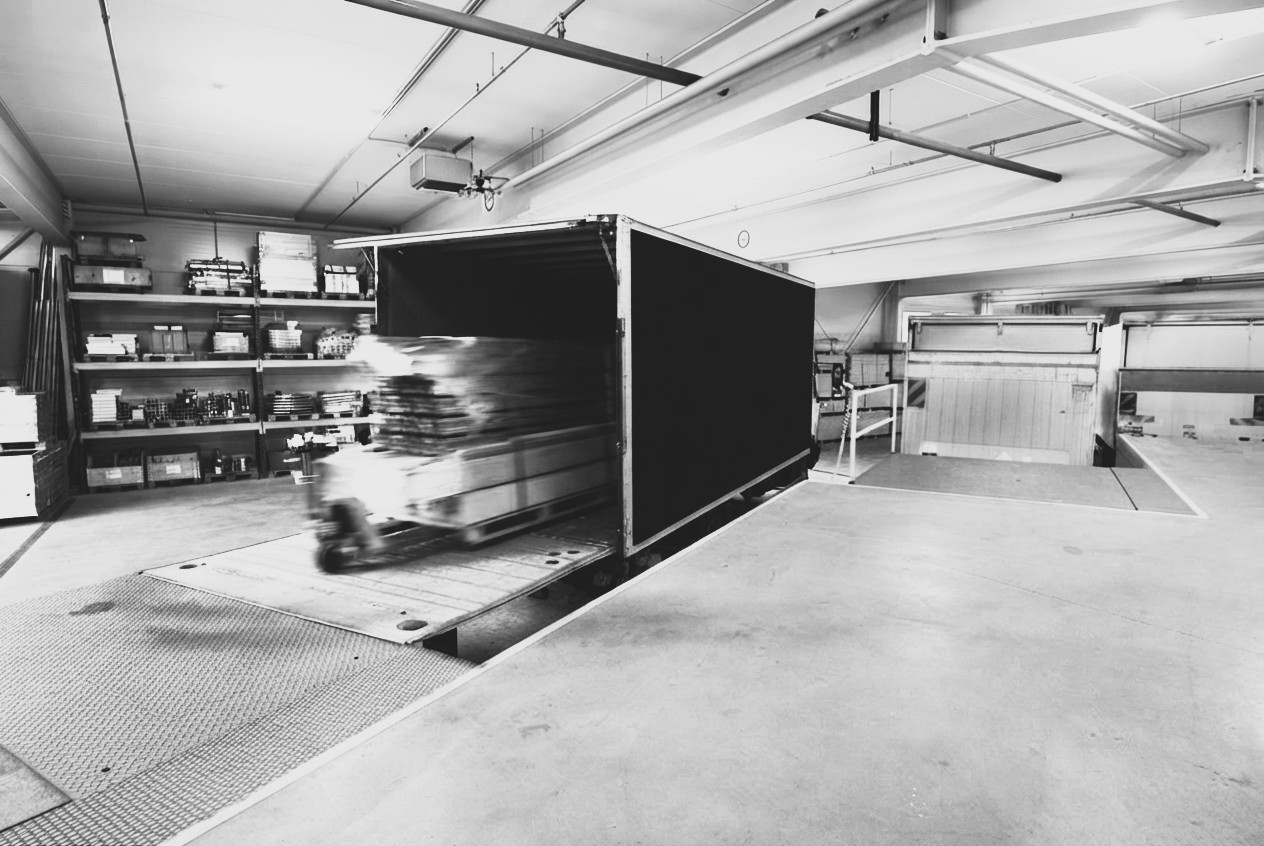
Transportation, Logistics & Installation
From the warehouse to the exhibition floor.
European trade show logistics require more than simply moving materials from one location to another. Delivery windows, exhibition venue requirements, cross-border transportation, handling, installation schedules and dismantling deadlines all have to work together.
At EXHIBIT Company, we coordinate the operational journey of your exhibition assets from production or storage to the exhibition venue and ultimately to the completed stand on the show floor.
Our transportation, logistics and installation services include:
- European transportation coordination
- Loading and preparation of exhibition materials
- Transportation from production or storage facilities
- Delivery to exhibition venues
- Coordination of venue delivery requirements
- Cross-border transportation coordination
- Customs and documentation support where required
- Handling of exhibition stands and components
- Coordination of on-site delivery
- Professional stand installation and build-up
- Technical supervision during installation
- Coordination with local installation teams
- Coordination with venues and suppliers
- On-site quality control
- Last-minute adjustments and troubleshooting
- Professional dismantling after the trade show
- Return transportation
- Coordination with storage for the next event
Our involvement can range from a single transportation or installation requirement to complete operational coordination.
You may already have a stand design and production partner but need a reliable European team for transportation and installation. You may have your own stand builder but require local support at a specific venue. Or you may want one partner to coordinate production, logistics, installation and dismantling.
EXHIBIT Company can adapt to your structure.
What Is Modular Exhibition Stand Production?
Modular exhibition stand production is the manufacturing and preparation of exhibition structures based on repeatable components and configurable construction elements. These components are designed to work together and can be assembled in different layouts according to the available exhibition space and project requirements.
A modular exhibition stand may combine standardised structural elements with custom-built counters, display units, branded panels, shelving and furniture. This approach allows companies to retain selected components while adapting the overall stand configuration for different events.
Typical elements of a modular exhibition stand include:
- Modular wall and partition structures
- Reusable frame and support elements
- Interchangeable graphic and branding panels
- Modular counters and reception furniture
- Configurable shelving and display systems
- Product presentation units and plinths
- Meeting and consultation furniture
- Integrated storage components
- Custom-built elements for specific booth layouts
- Connections, fittings and assembly components
The exact configuration depends on the exhibition concept, the available components, the required dimensions and the intended frequency of reuse. Modular production is not simply a matter of using standard parts. The individual elements need to be planned as a coordinated system.
How Modular Exhibition Stand Systems Work
A modular exhibition stand consists of components that can be assembled into a defined structure. Depending on the system, elements may be connected, extended, repositioned or combined with additional custom components.
The system is developed around a set of technical and design principles. These include consistent dimensions, compatible connections, repeatable construction details and a clear understanding of how the components are assembled and transported.
For example, a company may use a recurring set of wall structures, counters and display units. For one trade show, these elements may be arranged as a compact inline booth. For another event, additional components or a different configuration may be used to create a larger stand.
The ability to adapt a modular system depends on its original design. Not every component can be used in every layout, and the available system dimensions need to correspond with the requirements of each exhibition space.
Modular Exhibition Stand Design and Production
Successful modular exhibition stand production starts with a design concept that considers both the immediate exhibition and potential future configurations. The visual appearance needs to support the brand, while the technical structure should allow the planned components to work together.
Important design and production considerations include:
- Overall stand dimensions and available configurations
- Modular component sizes and connection details
- Graphic and branding requirements
- Integration of counters, furniture and display elements
- Structural requirements and intended use
- Assembly and dismantling procedures
- Packaging, transportation and storage dimensions
- Potential adaptations for future exhibition layouts
Design decisions made at an early stage influence the flexibility of the finished system. If components are intended for repeated use, dimensions, connections, materials and surface treatments should be considered in relation to future handling and reconfiguration.
Custom Modular Exhibition Stand Production
Modular exhibition stands do not need to look standardised. Custom elements can be integrated into modular structures to create a distinctive booth appearance while retaining selected reusable components.
Custom production may include:
- Individually designed reception counters
- Custom display walls and branded panels
- Product presentation structures
- Specially manufactured shelving and cabinets
- Custom meeting tables and exhibition furniture
- Branded fascia and architectural elements
- Display plinths and presentation platforms
- Integrated storage and service furniture
- Project-specific extensions to modular structures
Combining modular components with custom fabrication makes it possible to adapt the stand to a specific brand identity, product range or exhibition concept. The balance between standardised and individual elements depends on the intended use and the required degree of flexibility.
Reusable Exhibition Stand Systems
One of the main reasons for choosing modular exhibition stand production is the potential to reuse components across multiple events. Instead of manufacturing an entirely new structure for every exhibition, selected elements can be retained and integrated into subsequent stand configurations.
Reusable exhibition stand systems may be suitable for companies that participate in recurring trade shows, industry events and international exhibition programmes. They can provide a consistent structural basis while allowing selected visual and functional elements to change.
Potentially reusable components include:
- Modular wall and frame structures
- Reusable counters and furniture
- Display shelving and product presentation units
- Structural support elements
- Standardised connection components
- Selected graphic panels and branded elements
- Storage and service furniture
Reusability should be considered during the initial design and production process. Components need to be suitable for disassembly, handling, packaging and repeated assembly. Their actual service life depends on the materials, construction, condition and frequency of use.
Planning for Repeated Use
A modular system intended for repeated use should be documented clearly. Component dimensions, connection details, assembly sequences and identification information help project teams understand how the stand can be configured and prepared for future events.
It is also important to consider how graphics, decorative surfaces and product-specific elements can be updated without replacing the entire structure. This can be particularly relevant for companies with changing campaigns, product ranges or brand communication requirements.
Modular Exhibition Stands for Different Booth Sizes
A modular exhibition stand can be planned around different booth dimensions, provided that the component system supports the required configurations. The initial design should consider the types of exhibition spaces in which the stand is expected to be used.
Small and Compact Exhibition Stands
Compact booths often require efficient use of the available space. Modular wall structures, counters, shelving and integrated storage can help organise product presentation and visitor interaction within a limited footprint.
Inline Exhibition Stands
Inline booths are generally open on one side and positioned between neighbouring exhibition spaces. Modular backwalls, reception counters, product displays and compact meeting furniture can form the basis of a functional layout.
Corner Exhibition Stands
Corner booths are open on two sides. The modular configuration should account for visitor access from both directions and position display structures without unnecessarily restricting circulation.
Peninsula Exhibition Stands
Peninsula booths are open on several sides and share one boundary with another exhibition space. Modular structures can be arranged to define product presentation and meeting areas while maintaining access from the open sides.
Island Exhibition Stands
Island booths are accessible from multiple directions and may include several presentation zones. A modular system can provide a coordinated basis for walls, counters, display units and meeting areas distributed throughout the stand.
Not every modular system is suitable for every booth size or configuration. The available components, structural requirements and venue conditions need to be checked against the planned layout.
Modular Exhibition Stand Production for Different Industries
Modular exhibition stand systems can be adapted to different industries and product categories. The structure may remain consistent while the display elements, graphics, furniture and presentation areas change according to the requirements of each exhibitor.
Industrial and Manufacturing Companies
Industrial exhibitors may need modular structures combined with product platforms, technical display units, sample presentation areas and information panels. The dimensions and weight of the products should be considered when defining the display and structural requirements.
Automotive and Mobility Brands
Automotive and mobility exhibitors may combine modular branded structures with consultation counters, information displays and product presentation elements. The layout needs to account for vehicle dimensions, visitor access and the relationship between the stand structure and displayed products.
Technology and Electronics Companies
Technology exhibitors may use modular display walls, product shelves, demonstration counters and integrated furniture. Where screens, electronic equipment or specialist technical installations are required, the relevant interfaces should be coordinated with the responsible providers.
Consumer Goods and Lifestyle Brands
Consumer goods companies may use modular shelving, display cabinets, product stands and branded presentation counters. Interchangeable display elements can help adapt the stand to different product collections and campaign requirements.
Healthcare and Professional Services
Healthcare and professional service exhibitors may require reception counters, information panels, consultation furniture and product presentation areas. Specific hygiene, handling or regulatory requirements should be defined by the exhibitor and incorporated into the project specifications where applicable.
Materials and Components for Modular Exhibition Stands
The choice of materials and construction methods influences the weight, appearance, durability and handling of modular exhibition stand components. Material selection should reflect the intended use, the required finish and the planned frequency of assembly and dismantling.
Depending on the design, modular exhibition structures may involve:
- Aluminium profiles and metal components
- Plywood and other wood-based panels
- Medium-density fibreboard (MDF)
- Laminated panels and decorative surfaces
- Plastic and suitable sheet materials
- Glass and transparent display materials
- Printed graphic panels and textiles
- Custom brackets, fittings and connection elements
- Modular furniture and display components
Different materials can be combined within one system. For example, a modular structural frame may be complemented by custom counters, decorative panels, shelving and branded surfaces.
Where fire performance, structural properties or other regulated characteristics are required, the relevant specifications and documentation must be clarified before production. The selected construction must be appropriate for the intended application and the requirements of the exhibition venue.
Modular Exhibition Stand Production for Recurring Trade Shows
Companies participating in several trade shows each year may benefit from a modular stand concept that can be adapted to different event formats. Instead of treating every exhibition as an independent construction project, a coordinated component system can provide a common basis for recurring appearances.
This approach can be particularly relevant when a company exhibits at events with different booth dimensions, product priorities or visitor requirements.
A recurring exhibition programme may involve:
- A consistent set of modular structural components
- Different stand layouts for different event sizes
- Interchangeable graphics and branded surfaces
- Adaptable product display elements
- Additional furniture for larger configurations
- Custom components for selected trade shows
- Preparation and coordination of reusable materials
- Transportation and installation planning for each event
Each planned configuration should be checked against the actual booth dimensions and event requirements. A modular system provides flexibility only within the limits of its design and available components.
Modular Exhibition Stand Production for International Projects in Europe
International exhibition programmes often involve several trade shows in different countries. A modular stand may need to be produced, transported, installed, dismantled and prepared for another event as part of a coordinated schedule.
For these projects, production planning needs to consider the complete lifecycle of the components. The design should account for assembly, packaging, transportation, storage and potential reconfiguration.
Important considerations include:
- Coordinating modular design and technical documentation
- Defining component dimensions and connection details
- Planning production around the exhibition schedule
- Identifying and documenting reusable components
- Considering packaging and transportation dimensions
- Coordinating delivery with venue access requirements
- Planning dismantling and preparation for the next event
- Clarifying responsibilities for cross-border freight and customs procedures
For international shipments, responsibilities for freight, export and import documentation and applicable customs procedures should be allocated among the relevant parties. These activities should not be assumed to form part of the stand production scope unless explicitly agreed.
The geographical scope and appropriate production and delivery arrangements are assessed individually. Requirements depend on the project location, manufacturing arrangements, destination venue and agreed responsibilities.
Modular Exhibition Stand Production for Stand Builders and Contractors
Exhibition stand builders and contractors may require production support for modular structures, reusable components and custom elements that need to fit into an existing stand construction concept.
EXHIBIT Company supports defined production and fabrication tasks that can be integrated into the project structures of exhibition stand builders, trade show companies and exhibition contractors.
Possible areas of cooperation include:
- Production of modular wall and frame components
- Fabrication of custom elements for modular systems
- Manufacturing of counters, shelving and display furniture
- Production of branded panels and presentation structures
- Preparation of components for transportation
- Coordination with installation and dismantling requirements
- Support for recurring exhibition stand configurations
The contractor retains the agreed client relationship and overall project leadership. System specifications, technical approvals, production responsibilities and installation interfaces should be established before manufacturing begins.
Modular Exhibition Stand Production for Designers and Agencies
Exhibition designers and creative agencies often develop modular concepts to balance individual brand presentation with the practical requirements of recurring exhibition projects. Production support helps translate these concepts into physical structures and coordinated components.
Cooperation may include:
- Reviewing approved modular stand concepts
- Clarifying dimensions and technical construction details
- Producing modular structures and custom components
- Fabricating branded panels and display furniture
- Coordinating interfaces between modular and custom elements
- Preparing components for transportation and installation
The designer or agency retains creative direction and the agreed client relationship. Production activities are carried out within the defined scope and coordinated with the responsible project participants.
Transportation, Storage and Installation of Modular Exhibition Stands
Modular exhibition stand production needs to consider what happens to the components after manufacturing. Repeated use depends not only on the design of the system but also on how its elements are identified, handled, transported, stored and assembled.
Component Identification and Preparation
Modular components should be identifiable and organised according to their function and intended configuration. Clear documentation can help project teams prepare the correct elements for each exhibition.
Packaging and Transportation
Packaging arrangements should consider component dimensions, weight, surface protection and handling requirements. The transport concept needs to account for the delivery schedule and destination venue.
Installation and Assembly
Modular structures are assembled according to the defined configuration and relevant technical documentation. Assembly sequences, connections and interfaces with custom elements should be clear before installation begins.
Dismantling and Return Logistics
After the event, modular components intended for reuse need to be dismantled and prepared for return transportation. Their condition should be checked, and damaged or incomplete elements should be identified before the next deployment.
Storage and Inventory Coordination
For recurring exhibition programmes, storage and inventory information can help teams understand which components are available and suitable for future configurations. The storage requirements and responsibilities should be defined according to the agreed project arrangements.
Common Challenges in Modular Exhibition Stand Production
Modular exhibition stand systems need to balance flexibility, stability, appearance and practical handling. Several issues should be addressed during planning to avoid problems during production or at the exhibition venue.
Insufficient System Compatibility
Components need to fit together according to defined dimensions and connection details. Unclear interfaces can create difficulties when the stand is assembled or adapted to a different layout.
Limited Flexibility in Future Configurations
A modular system may appear flexible but still have limitations when used with different booth sizes. Future exhibition formats should therefore be considered during the initial design stage.
Unclear Component Documentation
Without clear identification and assembly information, reusable components can be difficult to organise and prepare. Component lists, drawings and assembly instructions support more consistent project planning.
Excessive Customisation
Too many project-specific elements can reduce the advantages of a modular system. The design should establish which components are intended to be reused and which are produced for individual exhibitions.
Transportation and Storage Requirements
Modular components need to be prepared for repeated handling. Packaging dimensions, component weight, surface protection and storage conditions can influence the long-term suitability of the system.
Changing Exhibition Requirements
Different venues and events may have different booth dimensions, access conditions and technical requirements. Each planned configuration should be checked against the current exhibition documentation.
Our Approach to Modular Exhibition Stand Production
Each modular stand project has its own design concept, component requirements and intended use. A structured process helps connect the initial design with production, logistics and on-site implementation.
1. Review the Exhibition Concept and Project Requirements
The process starts with the approved stand design, planned booth dimensions, event information and intended future configurations. The required modular components and custom elements are identified.
2. Define the Modular Structure
Component dimensions, connections, materials and configuration options are reviewed. The design should make clear which elements are standardised and which are produced for specific exhibition requirements.
3. Clarify Technical and Production Details
Drawings, specifications, construction details and relevant interfaces are clarified with the responsible designer, contractor or project manager. Open technical questions should be resolved before manufacturing begins.
4. Manufacture the Modular Components
The agreed structural elements, panels, counters, furniture and display components are produced according to the approved specifications. Custom and modular elements are coordinated as part of the complete system.
5. Prepare the System for Delivery
Finished components are identified and prepared for handling and transportation. Packaging, component organisation and delivery requirements are considered in relation to the destination venue and project schedule.
6. Coordinate Installation and Future Use
Where included in the agreed scope, transportation, installation, dismantling and related on-site support are coordinated with the wider project team. Potential reuse, storage and future configurations can also be considered as part of the project planning.
Why Choose EXHIBIT Company for Modular Exhibition Stand Production?
Modular exhibition stands need to combine a consistent visual appearance with practical flexibility. International project teams require production support that connects approved designs, component manufacturing and implementation without disrupting their existing project organisation.
EXHIBIT Company supports international exhibition projects with modular stand production, custom fabrication and related implementation services. Individual components or broader production work packages can be commissioned according to the requirements of each project.
- Modular stand production: Manufacturing of coordinated structures and repeatable exhibition components.
- Custom fabrication: Production of individual counters, display elements, furniture and branded structures.
- Reusable concepts: Consideration of future configurations and repeated use during the design and production process.
- Flexible cooperation: Individual production tasks or combined work packages covering several project stages.
- Coordination with existing teams: Cooperation with exhibitors, designers, agencies, stand builders and contractors.
- Logistics and installation interfaces: Consideration of packaging, transportation, assembly and dismantling requirements.
- International project support: Coordination of agreed production and implementation tasks for projects involving European locations.
The exact production scope, technical responsibilities and geographical availability are assessed individually. Specialist engineering, regulated installations, venue approvals and activities requiring specific qualifications must be assigned to the responsible parties and appropriately qualified providers.
Discuss Your Modular Exhibition Stand Project
Are you planning a modular exhibition stand for recurring trade shows? Do you need custom production of modular structures, reusable components, display elements or furniture for an exhibition project in Europe?
EXHIBIT Company supports international exhibition projects with modular stand production, fabrication, logistics and related implementation services.
Share your approved stand concept, technical drawings, planned configurations, exhibition locations and project schedule. Based on the available information, the appropriate production and implementation scope can be discussed.
Frequently Asked Questions About Modular Exhibition Stand Production
What is modular exhibition stand production?
Modular exhibition stand production is the manufacturing of exhibition structures from coordinated components that can be assembled and configured in different ways. It can include wall systems, frames, counters, display elements, furniture and custom components.
What are the advantages of a modular exhibition stand?
A modular exhibition stand can provide a reusable structural basis for recurring trade shows. Selected components may be adapted to different booth layouts, while graphics, display elements and custom furniture can be updated for individual events.
Can modular exhibition stands be customised?
Yes. Modular structures can be combined with custom-built counters, branded panels, product displays, shelving and furniture. This allows the stand to reflect individual design and functional requirements while retaining selected modular components.
Can one modular stand be used for different booth sizes?
Potentially, yes. The available configurations depend on the component dimensions, connections and original system design. The planned layout needs to be checked against the available components and the requirements of each exhibition space.
Are modular exhibition stands suitable for recurring trade shows?
They can be particularly suitable for recurring exhibitions because selected components may be reused and rearranged. The system should be designed with repeated assembly, transportation, storage and future adaptations in mind.
Which materials are used for modular exhibition stands?
Depending on the design, materials may include aluminium profiles, metal components, plywood, MDF, laminated panels, plastics, glass and graphic materials. The appropriate materials depend on the construction, intended use and required finish.
Can custom elements be integrated into modular exhibition systems?
Yes. Custom furniture, product displays, counters, decorative panels and other individual elements can be integrated into modular structures. Their dimensions and connection details should be coordinated with the system design.
How should modular exhibition stands be prepared for reuse?
Components intended for repeated use should be documented, identified and designed for practical dismantling and handling. Packaging, storage, condition checks and assembly information also influence their suitability for future exhibitions.
Does modular exhibition stand production include transportation and installation?
Transportation and installation can be coordinated where they form part of the agreed project scope. The relevant responsibilities, delivery arrangements and installation requirements should be established during project planning.
Can EXHIBIT Company support exhibition stand builders and contractors?
Yes. Defined production and fabrication tasks for modular structures, custom components and display elements can be integrated into projects managed by exhibition stand builders and contractors. The respective project partners retain their agreed client and project responsibilities.
Does EXHIBIT Company provide modular exhibition stand production in Europe?
EXHIBIT Company supports international exhibition projects involving European locations. The appropriate production, transportation and installation scope depends on the project requirements and geographical arrangements and is assessed individually.
What information is needed for a modular exhibition stand project?
Useful information includes the approved stand concept, booth dimensions, planned configurations, component drawings, material specifications, exhibition locations and project schedule. Information about intended reuse and future event formats is also helpful when developing a modular system.
We are the European Partner for Trade Shows & Events.
EXHIBIT Company is more than a service provider—we are your trusted European partner. With years of experience in trade shows, exhibitions, and live events across Europe, we help international exhibitors, event agencies, and trade fair construction companies succeed without stress, risk, or complexity.
We combine local expertise, flexible modular services, and cost-efficient solutions to ensure your brand shines at every European event. From custom booth design and professional production to on-site project management, logistics, and multi-country coordination, we act as an extension of your team, delivering predictable, high-quality results.
Why Choose Us?
Experience & Expertise: Deep knowledge of European venues, regulations, and suppliers
Flexible & Modular Services: Choose exactly what you need—no unnecessary costs
Agility & Reliability: Quick adaptation to last-minute changes, with seamless execution
Partnership Approach: Your success is our priority; we work as part of your team